Showing posts with label Injury prevention. Show all posts

10 Ways You're Sabotaging Your Flexibility Training


I've MOVED! Check this post out on my new fancy website: AerFit.ca !!!


Everyone wants to be more flexible, especially aerialists and dancers. Increased range of movement has many benefits for us, including reducing risk of injury, more options for poses and skills, and more beautiful lines. The main issue with most amateur aerialists and dancers is that we're often starting from scratch and end up feeling like it takes forever to make any noticeable progress.  For years I've been trying to train my flexibility and I was getting frustrated with my lack of progress.. feeling like I was never going to get to the point I so wanted to be at. I felt too old, too tight, even if I really disciplined myself in my training. But I've been doing more and more research on ROM and flexibility conditioning and I've actually discovered that I've been sabotaging my own training! Flexibility is way more complex than I thought and I've had to relearn things that trusted coaches have been telling me for years: see my previous post. Ive compiled a list of the worst offenders and laid them out here for you. If you are doing any of these things it's time to make some changes- you won't believe how fast you progress afterwards!!!


1. You're only static stretching
Surprise! Static stretching is actually the most ineffective and potentially dangerous way to gain flexibility. Static stretching consists of holding deep stretching poses for extended lengths of time. For years this has been an an integral part of any dancer's, gymnast's, or aerialist's training. The idea has always been that if your muscles are "tight", you can "lengthen" them by holding these static positions for extended periods. Science and sport has actually come to the conclusion that not only is this ineffective at increasing ROM but also can cause injury.

Flexibility starts in the brain. Your nervous system does its best to protect you from injury. This means if you force it into positions it is unfamiliar with, it will contract and resist the movements to protect you- even from yourself! This causes micro tears  (and sometimes not-very-micro tears) in the muscle tissue. Do this enough times and you'll start to build up scar tissue. PS: Scar tissue doesn't stretch.

Muscles don't actually lengthen. They are similar to an elastic band in that after extending they return to a neutral position. Lengthening would rid them of their elasticity which we don't want. All flexibility conditioning is, is getting your nervous system comfortable with being at those extended ranges.

Here's the tricky bit: adding static stretching (15-45 second holds) to your training can have a positive impact. The issue comes with when you only perform static stretching, (as opposed to a combination of methods..) do static stretching as a warm-up, or go too deep for too long.

2. You aren't hydrating enough
Drinking enough water while you are training is SO IMPORTANT. Studies have shown a link between even a small amount of dehydration and a higher risk of injury. Chronic dehydration is a major problem in a lot of athletes. Water is needed to not only make cells function, but also provide lubrication for joints and fascia. Dehydration can lead to a huge number of psychological issues as well including; reduced motivation to exercise, reduced cognitive performance, mood changes, fatigue, irritability and more... All of these things can have an impact on your flexibility conditioning.

Drinking water is one of the easiest things you can do to improve your performance! So take it seriously and stay hydrated.

3. You aren't including strength training
Flexibility is not just about passive flexibility. What's the point of being able to lift your leg above your head if you can't hold it there on your own? Because your ROM is controlled by your nervous system's innate urge to protect you from injury, strengthening the muscles is a great way of making your system feel safe and stabilised and the edge of your range, thus allowing you to push further.

I talked about PNF techniques in my last blog post, and how it includes isometric contractions to increase strength at the edge of your range. This is a great method of flexibility conditioning that I highly recommend incorporating into your training. Isometric contractions of the muscle involve contractions that don't change the length of the muscle. For example,  laying on your back while someone lifts your leg and pushes it to your head, you resist their force by contracting your hamstrings and quads. Their opposite force results in your leg staying in the same position, thus making it an isometric contraction.

4. You aren't warming up enough
Stretching is NOT a warm up. A warm up should do exactly that, warm you up. It should consist of 10-15 minutes of an activity that 1) gets your heart rate up - increasing blood flow to your joints, limbs, and organs, and 2) gently introducing your full range to your whole body. Warm ups should be dynamic in nature, kicking, jumping jacks, shoulder circles, wrist circles, hip circles.. lots of circles basically. Personally, I love starting with something to get my heart rate up; mountain climbers, jump rope, jogging. Then I move through my range starting with the top of my body: neck rolls (only rolling forward, never hyper extending the neck back), shoulder rolls, chest/ hip movements, kicks, ankles etc..

The more you warm up the better. Warm muscles go further, and there is less risk of nerves firing to protect you from injury. It is very important to keep in mind that your flexibility conditioning should be saved for AFTER your main training. Stretching the muscles, especially static stretching for extended lengths, can reduce your muscle strength, power, and speed significantly. Not only that, but when you stop your warm up in order to stretch, you're essentially cooling down, and you must warm up again before you train. It doesn't make a lot of sense.

5. You aren't consistent
One of the biggest things that will take your flexibility conditioning to the next level is to do it consistently. This means once a day at least, and twice a day if you're serious. As I said earlier, your nervous system plays a huge role in your ROM. Your body will make it easier to do things that you do frequently overtime. It's not enough to do your conditioning once in a while. You have to tell your body it's safe to be there by going there often and not freaking it out by pushing too deep. Even if it's just a matter of taking your body through its full range several times a day for a few minutes- that will make a difference.

Basically, the more often you hang out there, there more your nervous system will be like, "oh this again. Nothing bad happened last time, so yeah, let's go there again." Get it?

6. You're holding your stretches for too long
I see this ALL THE TIME. Some poor dancer or aerialist sitting in her splits with a timer going for 2 or 3 minutes. I cringe at the sight of it. All you're doing is causing injury to the muscle. You think your body will want to let you go that far again if all you do is cause the tissues to tear and bruise? Studies have shown time and again that there is virtually NO benefit to holding static poses for more than 15-45 seconds. Seriously, this is the biggest way you are sabotaging yourself! STOP IT! NOW!

7. You have bad form
Consult your coach for proper anatomical form. Just like skills on your apparatus, stretching and strengthening moves require proper form to 1) protect you from chronic and acute injury, 2) reduce the chance of forming bad habits and 3) actually be effective. Each drill is different but there are a few common cues for proper form, such as flat back, squaring hips, shoulders back/engaged etc..

Look in a mirror or take video of yourself, and compare yourself to images demonstrating correct form in the particular skills you want. Look for neck and head placement, the direction of the knees and feet, the angle of the elbows and knees, the tilt of the pelvis, and the curve (or lack thereof) in the spine/back.

8. You're not breathing
How many times have you come out of a difficult skill panting because you were unintentionally holding your breath? The same can happen with training your flexibility. You feel the tension and pressure, and you're concentrating so hard you forget. to. breathe.

It goes without saying that breathing is pretty important! Not only for, like, keeping you alive and stuff... but deep breathing helps you to relax. It releases endorphins and lowers stress levels. This can actually make your body feel safe. Which might let you go a little bit deeper. A good rule of thumb is to inhale on the contraction and exhale during the relaxation phase.

9. You're going too deep
This goes back to the idea that you can't injure the muscle and expect it to want to move there again. There is no need to rush. Especially because in this case, moving ahead too fast before your body is ready, will only set you back and hinder your progress.

Take it slow. Stretching should give you a bit of pressure. It's not comfortable, but it shouldn't be painful either. Pain is your body's way of telling you something is wrong. Pain usually indicates that you're going too far. Push yourself to your edge, but don't risk over-stretching and hurting yourself. Once your muscles are injured your nervous system will work even HARDER to protect them from further injury by really limiting your range of motion. This is the opposite of what we're going for here! So ease up a bit!

10. You fail to see the bigger picture
Your body is complex and interconnected. Every part of your body has the ability to affect another part. Every movement and skill requires multiple focuses. Your splits is not just about your hamstrings. It's also about your calves, your hip flexors, your psoas, your back.. etc. If you injure yourself, or are out of anatomical alignment, or have been working with bad form, you can expect your body to compensate for the damaged or weaker muscles by putting pressure on other muscles.

It's important to understand how your anatomy works. How your body is connected. Understanding your anatomy and how each skill uses particular muscles will help you get the most out of your training. It will also help you prevent injuries.

Overall, flexibility conditioning is not just about stretching. Theres a lot of stuff at work in your body- and understanding that, and nurturing that (rather than potentially working against it), will help you achieve your flexy goals.

-Samantha

Flexibility: Why Static Stretching is NOT the Answer!

I've MOVED! Check out this post and more on my new fancy website AerFit.ca !!!


If you're an active person- whether that be running, team sports, aerial arts, martial arts, or dance... you have probably been told by a trusted coach or athlete that deep static stretching will reduce the risk of injury and improve your range of movement ( ROM ).

flexibility increase static stretching dynamic stretching ROM PNF


I'm here to blow your mind. Static stretching is not the most effective way to increase ROM in your practice, whatever it may be. It has not been proven to physically lengthen the muscle or increase active or passive ROM. In fact, static stretching has been shown in clinical studies to reduce speed, strength, and power for up to 24 hours after the fact.

Let me start by differentiating between active and passive ROM. If you lay on your back and have someone lift your leg until the moment of resistance- that is passive. If you are standing and kicking your leg up into the air the highest you can, that is active. Your passive range is going to most likely be larger than your active range. This is because your nervous system controls your range of movement and it will not let you put your muscles in a place it feels is unsafe.

Essentially, you have to shake the idea that you need to increase the muscle length.  Muscles do not change shape or get longer. It is a matter of tolerance. If your nervous system is not familiar with the range you are trying to push your muscle to, it will fire nerves to resist the movement, and cause pain, in order to protect your muscle from potential injury. It is saying "Oh hey! Stop right there! I can't confirm if it's safe to go further!" When under general anesthesia, it has been reported that ROM is generally increased. What does this mean? How do you wrap your head around something that contradicts what we've been taught by trusted coaches?

There are several components to flexibility. Strength is one of them. The reason your nervous system stops you short of your full ROM is that it doesn't think it can control the muscle in the unfamiliar territory. By combining strengthening the muscle with dynamic stretches that take you to the edge of your tolerated range, you will increase your flexibility dramatically.

Is static stretching always a bad thing? Not necessarily. Regular light passive/static stretching ( held for 30 sec to no longer than a minute ) when warm can be effective in training your nervous system to feel safe and capable at the edge of your tolerated range, thus increasing your range. This is probably why people who have a static stretching regimen see increases in flexibility. It is not that they are actually "lengthening" or changing the shape of the muscle, but that their nervous system is becoming more and more comfortable at their max range allowing them to push a little further.

A better way to train your flexibility is through the use of dynamic stretching, strengthening the muscle at the edge of your active range, and a technique called PNF (Proprioceptive neuromuscular facilitation).

PNF is an advanced form of ROM conditioning that uses a combination of passive relaxation and active contraction of the targeted muscle group to increase flexibility. PNF was developed by neurophysiologist Herman Kabat. The technique was originally developed as a form of rehabilitation for tissue related injuries, but has since been used by athletes, dancers, and gymnasts to increase general ROM therefore reducing the risk of injury and improving performance.

Usually PNF is performed with a partner but can be just as effective if done by yourself using straps or other props as aids. It is important to remember that like anything else, practice makes perfect. Consistently conditioning your ROM after your workouts will bear results faster than just working on it once in a while. Knowing how to increase your ROM effectively is only the first step. Stop static stretching as part of your warm up, and add in more strength conditioning, dynamic & active exercises to your routines.

One of my new year resolutions is to apply these methods and track my flexibility progress! If you want to do the same, I recommend the following resources:

Here is Jules Mitchell, a Yoga instructor whose master's thesis was on the science of stretching, talking about some of her findings on the nature of stretching and neurophysiology:

http://www.liberatedbody.com/jules-mitchell-lbp-009/

http://www.julesmitchell.com/stretching-and-muscle-control/

This YouTube channel has some great  demos of PNF techniques:


I really recommend you take a further look for yourself into different ways to dynamically condition warm-up, and strengthen your muscles. Feel free to leave feedback or email me if you have something to add or discover something you think I may be interested in!

Samantha


Why the R.I.C.E. Method Doesn't Work

I've MOVED! Check out this post and MORE at my new website, AerFit.ca !!!

The R.I.C.E. method, coined by Dr. Gabe Mirkin in his best-selling book The SportsMedicine Book (1978), has been touted as the end-all be-all of muscle injury treatment and recovery methods for the past several decades. R.I.C.E. stands for Rest, Ice, Compression, and Elevation. It is so pervasive that despite current scientific and medical studies showing the detrimental effects this method has on healing, you will still find most doctors and sports professionals recommending it as a viable treatment.

Disclaimer: Always consult a doctor for any serious injuries. This blog is intended for reference/educational purposes, not to diagnose or treat medical conditions. Sources are hyperlinked.

Injury Prevention Aerial Circus RICE MEAT


Rest

For the acute stage of injury, rest is important. Continuing to push through your physical task when in pain is ignoring your body's message that something is wrong. Immediately stop what you are doing and take rest. For mild injury this may only be a few minutes, for more severe injury it may be longer. Intense sensation and mild discomfort are normal when building muscle and flexibility, however acute pain is not normal and should be heeded as a warning of injury. Where rest doesn't work is when it is prolonged or excessive unnecessarily. Bed-rest is especially detrimental to recovery as it inhibits circulation among other healing mechanisms in the body. After the initial acute stage of injury, movement and exercise should be introduced slowly to restore proper circulation and blood flow which carries nutrients to the injured tissue and encourages lymphatic drainage of metabolic waste. Movement will also help regain range of movement and prevent scar tissue from building up around the injury. Exercise should be used to start strengthening the muscle again. There is a mental component that comes into play when immobilising the injury for too long. You might experience inhibition in moving the affected area if you wait too long before introducing recovery movements and physical therapy.

Ice

Ice is perhaps the most pervasive injury recovery treatment recommended by professionals today. Let me start by saying this; swelling and inflammation is the bodies natural response to injury. A recent study published by The Journal of The Federation of American Societies for Experimental Biology showed evidence that inflammation is actually beneficial and in fact necessary for tissue recovery. That's because in the study, researchers discovered a hormone being produced in great amounts by inflammatory cells, called insulin-like growth factor 1 or IGF-1 which increases the rate of muscle regeneration and greatly improves muscle repair. Previous ( and current ) opinion of professionals is that reducing swelling encourages healing, however the results of this study contradict that notion. It was found that the application of ice and the use of non-steroidal anti-inflammatory drugs (NSAIDs) such as ibuprofen inhibits the body from delivering this healing hormone (and therefore inhibits proper healing ).

Ice has also been shown to reduce muscle strength, power, and endurance. It affects the way your nerves function and although this may relieve pain temporarily it will affect the healing process greatly. It also constricts blood vessels, restricts blood flow preventing vital nutrients, oxygen, and other healing properties from reaching the area.

According to professionals, Ice can be applied briefly for short periods to manage pain.

Compression and Elevation

Compression and Elevation fall into the same category as Ice. They reduce swelling and blood flow to the injury and therefore should be considered as detrimental to the healing process.

In terms of compression or immobilization, protection should be the main theme here. Focus on protecting the injured area while it heals, this includes removing it from the cause of injury, seeking out proper treatment, and not engaging in any activity that might exacerbate the injury,

The use of NSAID's have also been shown time and again to inhibit healing.

So what IS the best method for recovering from a muscle, tendon, or ligament tissue injury? I have discovered a method called M.E.A.T. that seems to make the most sense. M.E.A.T. stands for:

Movement

As I mentioned above, movement should be introduced after the acute stage of injury when pain and swelling has significantly subsided. movement should be gentle but consistent. Things like gentle stretching have also been shown to be effective. This is as opposed to total immobilization which has been shown to be less effective in long-term healing.

Exercise

Including targeted strengthening exercises will increase blood flow to the affected area, strengthen the muscle, as well as help to prevent build up of scar tissue.

Analgesics

Medication to relieve pain can be administered in moderation, but you should avoid the use of NSAID's especially since prolonged use of these can lead to stomach ulcers and other gastrointestinal stress, not to mention that they have been shown to inhibit muscle repair as stated above. Some people have found the use of Epsom salts or Arnica (homoeopathic treatment) to have healing effects, and some people use topical analgesics to relieve pain.

Treatment

Various treatments that have been shown to be effective in healing muscle/tendon injuries are: massage therapy, taping, acupuncture, alternate ice/heat in short periods during acute phase, and physical therapies.

Remember that in extreme cases for serious tears and injuries one should always consult a doctor. If you are having other symptoms such as fever, vomiting, dizziness, please seek out emergency medical care.


Shoulder Alignment: Injury Prevention 101

I've MOVED!! Check out this post and more at my new website, AerFit.ca !!!


I wanted to write a post on proper shoulder alignment in aerial work as shoulders are THE most susceptible to injury due to their large range of motion and complex structure. In aerial, a lot of pressure is placed on the shoulders continuously and it is all to common for aerialists to have poor posture leading to injuries such as muscle tears, sprains, & pulls, tendonitis, dislocation, weakness, and more. The anatomy of the shoulder, specifically the rotator cuff, is something I believe all aerialists should have at least a basic understanding of in order to help prevent these types of injuries.

Shoulder Alignment Injury Aerialist Circus

As you can see from the image above, the shoulder joint is very complex, and essentially sacrifices stability for mobility. This benefits us on the one hand because it gives us so many options for types and range of movement in our shoulders and arms. However, the trade off is that this range of motion creates instability in this area.

Here is an excellent video explaining rotator cuff anatomy that is easy to understand:


As aerialists we are constantly holding our body weight with our shoulders during hangs, climbing, inversions, and twists. In each of these movements we should be aware of where our shoulders are and how they are engaged.

The various movements of the shoulders are as follows:

Elevation:
Shoulder Elevation Aerial Circus

Depression:

Protraction:
Shoulder Protraction AerialistShoulder Alignment Aerial Circus


Retraction:

Alignment of Shoulders Aerial RelfectionsShoulder Retraction Aerialist

Lateral Rotation:
Aerial Shoulder Alignment

Medial Rotation:
Shoulder Alignment Aerial Injury Prevention

External Rotation:
Shoulder Alignment Aerial Circus

Internal Rotation:
Rotation Shoulder Injury Prevention


It is a good idea to practice each type of movement with your arms in different positions (extended overhead, to the side, in the front, and down by your side) so that you fully understand what the movement feels like and how they compare to each other.

For the majority of movements in aerial dance good posture is accomplished by depressing the shoulders down and away from your ears, and also externally rotating. In any movement where we are hanging or pulling with our arms overhead, we should be in this position. If we perform these movements with elevated shoulders we end up unnecessarily engaging all of the muscles in the neck and upper shoulders, which can lead to injury and fatigue in these areas (and instability in the shoulder joint).

For movements where we are inverted and our arms are in front of us, as opposed to overhead, we must make sure our shoulders are retracted. This helps us engage the latissimus dorsi muscle and
in turn, provides us with more shoulder stability in this position.

There are other applications for the different movements and you will learn these as you go, which is why it is important to have an aerial instructor who is familiar with proper shoulder alignment and injury prevention.

Paper Doll Militia has a series of videos called Aerial ABC's that are very informative:


Below are 5 tips to protect your shoulders and other joints in Aerial Dance:

  1. Always warm up well! Get your body moving and your heart beating. Your goal here is a couple of things: warm up the body by increasing blood flow to the muscles, prepare body by introducing it to range of movement. You should be doing exercises with your shoulders that take you through the full range of motion. Static stretching is NOT warming up, and can actually lead to an immediate decrease in muscle strength and therefore could set you up for injury. You should be doing brief cardio type movements, as well was dynamic stretches.
  2. Stay Hydrated! Drink enough water to feed your cells while you do ANY physical activity, (and in general). A hydrated body is a lubricated body.
  3. Remember your posture. Keep your shoulder position in mind throughout your training session. Practice the various movements so you become comfortable with executing them. Ask your instructor if you are unsure about where you shoulders should be in any particular position.
  4. STOP IMMEDIATELY if you start to feel pain, numbness, tingling, or extreme fatigue in any joint. Mild discomfort is normal. Pain is not. Pain tells us something is amiss in our bodies, listen to that message.
  5. If you do end up with an injury there are things you can do to minimize damage and accelerate healing. You can apply ice briefly to help with pain, however swelling is the body's natural response to injury and is a healthy way for the body to bring blood and other healing components to the affected area. Avoid using the injured joint for at least a couple of days, rest is key. You can also take a NSAID to help with any pain, however these can hurt your stomach and inhibit muscle growth so only take when necessary. Once you are feeling up for it you can start to move the joint around, stretching and warming up, to slowly regain range of movement and promote healing. This will reduce stiffness and the instance of scar tissue. If pain is severe, if the joint looks like it is protruding, or if you feel numbness that does not subside, you should go to a doctor right away.
I hope this article helps you to realize how important shoulders are in aerial work and in general and inspires you to take better care of them :)

Samantha


Muscle Anatomy: Endurance, Power, Flexibility


I truly believe that a good knowledge and understanding of how your body works will determine how well you train. It will contribute to injury prevention as well as gains in endurance, strength, power, and flexibility. Endurance is how long your muscles/body can be at work. Strength is the amount of work your muscles can do. Power is a combination of strength, force, and speed . Flexibility is the ability to lengthen your muscles to their full extent. Aerialists need to train their body for all of these abilities in order to become successful. I will write posts on training each of these aspects and more, but let's first take a look at how the muscle does these things.

There are a few different types of muscle, however the muscle we will be talking about today is skeletal muscle.  Skeletal muscle is a striated muscle tissue that is controlled by the somatic nervous system, meaning that we voluntarily control our skeletal muscles (unlike the heart which is a muscle controlled by the autonomic nervous system). The muscle tissue is made up of several components that form together as muscle cells, or fibres. One of the ways in which to classify muscle fibres is on their "twitch" speed. This is basically how fast the muscle can create ATP (adenosine triphosphate, muscle energy) from various resources (nutrients such as carbs, fat, etc) . There are two ways that muscles can produce ATP; Aerobic (with oxygen) and Anaerobic (without oxygen). Our cells prefer to create ATP with the presence of oxygen to fuel metabolism, however the increased intensity of exercise will use oxygen faster than our bodies can deliver it, thus increasing the need for other resources. Unlike Aerobic metabolism, anaerobic metabolism is not sustainable for long periods of time and the muscles become fatigued and produce chemical waste (lactic acid) which causes that burning sensation during intense exercise.

So, fast twitch muscles use mainly Anaerobic metabolism, while slow twitch muscles use mainly Aerobic metabolism. Everyone has approximately a 50/50 split of fast and slow twitch muscle fibres. If you are naturally good at sprinting vs long distance running, you may have slightly more fast twitch muscles. Fast twitch would be preferable for athletes who need quick bursts of power but do not need the endurance, while slow twitch muscles would be preferred by athletes who need to endure long periods of muscle contraction but may not need their muscles to contract quickly. In aerial arts we use a good combination of both slow and fast twitch muscle fibres.


Muscle Anatomy Aerial Dance Flexibility

So, now you understand how muscle fibres use different methods to create energy, and how that type of method can be applied in different athletic settings. But how exactly does a muscle contract?

Your brain sends a signal to the nerves in your muscles to contract. There are tension generating cells within your muscle fibres that cause the contraction. Contracting a muscle can be isometric (producing tension without changing in size) or isotonic (producing tension and changing in size). An example of isometric contraction would be holding a plank position. You are creating muscle tension to hold yourself up, but your muscles are neither shortening or lengthening. Isotonic contraction would be when you move from holding a plank to doing a pushup, and your muscles start to lengthen and shorten to create that movement in your body. 

There are sensory receptors in your muscle fibres called muscle spindles. The spindles run parallel with the muscle fibre, and are in charge of telling your body what position your muscle is currently in. Is it shortened? Is it lengthened? Your spindles send this information to your brain via your nervous system. This information helps you determine where exactly your body is in space. The spindles also play an important role in muscle flexibility, as they activate motoneurons that contract the muscle in order to resist muscle stretch to prevent injury. If you are not a very flexible person, this means that your muscle spindles are trying to protect your muscle by not allowing it to lengthen in a stretch reflex. You can condition the spindles to allow lengthening through chronic stretching, thus increasing your flexibility. Some people are naturally more flexible than others and some people must work for it.
Muscle Anatomy Aerial Strength

As I mentioned earlier in this post, your muscles need to produce ATP, or, energy.  You need to provide your muscles with the appropriate fuel (food!) in order to make this happen. Carbohydrates are the body's preferred source of energy, (and your brain's ONLY source!) . Carbs are broken down into glucose which is further used to produce ATP. This is especially important in Anaerobic metabolism when there is no oxygen present. 

Diets such as the Atkins diet are founded on the idea that without many carbs for your body to use as fuel, your cells must turn to create energy from fats (ketosis) , however this process is less efficient at creating adequate energy, and can mess with your metabolism creating a whole host of problems

Healthy carbs are essential in everyone's diet. Potatoes (baked or steamed), raw veggies like carrots,  green peas, bananas and other fresh fruits, and whole grains are all great examples of healthy carbs that provide your body with lots of fuel for being active. It is also very important to eat healthy fats in moderation such as avocado, nuts and seeds, etc. And for rebuilding that fatigued muscle? Protein! You can get more than enough protein from eating plants such as nuts and seeds, legumes, grains, and vegetables. If you want to throw some healthy animal protein, try omega-3 rich fish such as salmon. I don't personally advocate eating other animal proteins as many studies have linked consuming meat (especially red/processed meat) with cancer and other diseases. Not to mention the ethics of current meat production (environmental destruction, world hunger, hormones, antibiotics, mistreatment of animals etc).

I hope this article has given you a thorough understanding of the muscle, how it works, and gets you to start thinking about how you can train smarter. 


Aerial Conditioning at Home

Edit:

I have since changed my views on flexibility conditioning. You can read more about that here. I will leave this video up for the strength conditioning but I will be writing a guide on conditioning for aerial arts at home.


----


I made this video for my students so that they had a general idea of how to condition their bodies for Aerial Dance while at home, in between classes.


These are suggestions, but obviously it is important to consult with your doctor before taking on any training program. 

Some important notes on training at home:

1) Drink lots of water. It is easy to forget about this in a comfortable setting like your house! Stay hydrated!

2) If anything hurts, STOP. Obviously exercise can cause some discomfort, but you should be able to tell normal muscle fatigue or discomfort from stretching ..and actual pain. If you experience dizziness, light-headedness, or shortness of breath- stop and rest. If it persists along with other symptoms like chest pain or pain down the arm it's time to visit an emergency room.

3) It helps to have something cushiony under you like a yoga mat or thick carpet.

4) Do all of the suggested reps and sets! Don't give in to the temptation of longer rest periods or improper technique because you are alone! (That being said, refer back to note #2)

5) After training try to ingest some sort of protein within 30 minutes after your workout. Also remember to take adequate rest between workouts. These along with staying hydrated will contribute to a quicker muscle recovery time.

One thing I didn't add to the video was WARMING UP. This is the MOST IMPORTANT THING. You should do some cardio or dynamic warm-up exercises to increase your internal body temperature. This has been proven to prevent injury and lead to a more effective work-out. I generally try to warm-up for 15-20 minutes before doing any conditioning. You could do an aerobic workout from the 80's! You could jog for 20 minutes! However you do it, just get your heart pumping and your muscles contracting!

Also Pull-Ups.... lot's of pull ups. Invest in a door-frame pull-up bar, go to a local park with monkey bars, use the assisted pull up machine at your gym. 

There are also multiple resources on my resource page that you can use for training at home. I suggest you take a look!!


Improve Your Body Awareness

HEY! I've moved!! Check out this post and more at my new website, AerFit.ca !!!


Lately I have had a huge interest in anatomy, physiology, and physical training in the context of circus, and I suppose fitness in general. Body awareness is one of the most important aspects of becoming an Aerialist. Someone with little to no fitness ( or creative movement) training or experience will not have a good awareness of their own body; where it sits and moves in space, how to understand direction in regards to movement, and their own limitations regarding strength, flexibility and endurance. This puts this person at a disadvantage as they are more likely to injure themselves, or get frustrated with movements they don't understand or are unable to achieve.  I have placed a lot of importance on developing my own body awareness, and also to support my students in this task as well.

There are a few things that make the task of improving body awareness a bit more difficult as an aspiring aerialist...

You invert a lot
Someone not used to inverting is going to get very disoriented when they are upside down. Left is right, right is left, down is up, up is down! They might not know where to look, or what sensations to expect. They might end up feeling dizzy or nauseas or light-headed as the blood rushes to their brain. They might feel tingling in the extremities as the blood leaves these areas. When your head is facing the floor and you have this unknown thing supposedly supporting your weight, it is hard to trust and let go. Not only that, but you are in a room full of people you probably don't know very well, and now your shirt is flying up, your face is getting all red and gravity doesn't flatter anyone in that way. There is A LOT to think about.

You spin a lot
Spinning is either super fun, or really horrible and terrifying. Do you close your eyes? Keep them open? Different positions make you spin faster and some slow you down. If you aren't sure what to expect the sensation can be dizzying. Nausea is common...

Heights
Fear of heights is extremely common and for Aerialists this is no exception. You must learn a new trick or wrap, climb up to sometimes dizzying heights, and remember to wrap correctly while simultaneously holding on for dear life, and trying not to look down.

Luckily as a beginner, you will find you get a lot of support and patience when it comes to the above things. No teacher will make you climb to heights you are uncomfortable with before you are ready, or spin if you are feeling sick, and they will spot you and support you when getting used to being inverted. And, as you learn about and start to work with all of those muscles you have forgotten about ( or didn't know existed)  you will gain confidence in your ability to fly.


So how do you improve your body awareness?


  • Move as much as you can. Practice moving every. single. day. There is no wrong way to move... dance, do aerial conditioning, run, walk, cartwheel, swim, jump rope, play tag.
  • Watch yourself in a mirror. Move your body in front of a mirror and watch yourself closely. Watch the different parts of your body, paying attention to connectedness in movement,  extension, rotation, alignment etc...
  • Record yourself on video. Choreograph a little dance to a song and video tape yourself. Notice how maybe your movements look different to how they felt. Notice how much space you take up.
  • Get a good coach. A good coach will be there to spot you, to remind you of your alignment and technique, and to teach you how to be aware of your body as you move.
  • Listen to your body. Drink when you are thirsty, eat when you are hungry, rest when you are sore, take care when you feel pain. Honour what your body tells you!
  • Know your body. Learn the names of the muscles and bones. Learn the vocabulary of movement. What is does lateral mean? How does external rotation feel or look different from internal rotation? Below I have outlines the major muscle groups used in aerial ars that you should focus heavily on when training your body awareness.

Core

Core, core, and more core! Your core is a large group of muscles that you use for trunk flexion and extension, balance and stabilization, posture support, and for holding all of your precious organs in place. You will find dramatic improvements in your performance, posture, and injury prevention when you train your core adequately. The core consists of your abdominals, your obliques, your glutes, and I would even say your Latissimus Dorsi and the erector muscles that support your spine.


Muscle Groups Aerial Training Circus Body Awareness


Hip Flexors

The Hip Flexor muscles are exactly what they sound like, a group of muscles that support the flexion and extension of the hips and legs. Strong and flexible hip flexors mean improved inversions, fluid movements with the legs, stability in the hips, protection of the knee joints and lumbar spine, and better splits. The hip flexor group consists of the illiopsoas (sometimes referred to as psoas for short), the adductor muscles of the inner thigh, the tensor fasciae, among other small stabilizing muscles.


Hip Flexors Aerialist Training CIrcus


Arms & Grip

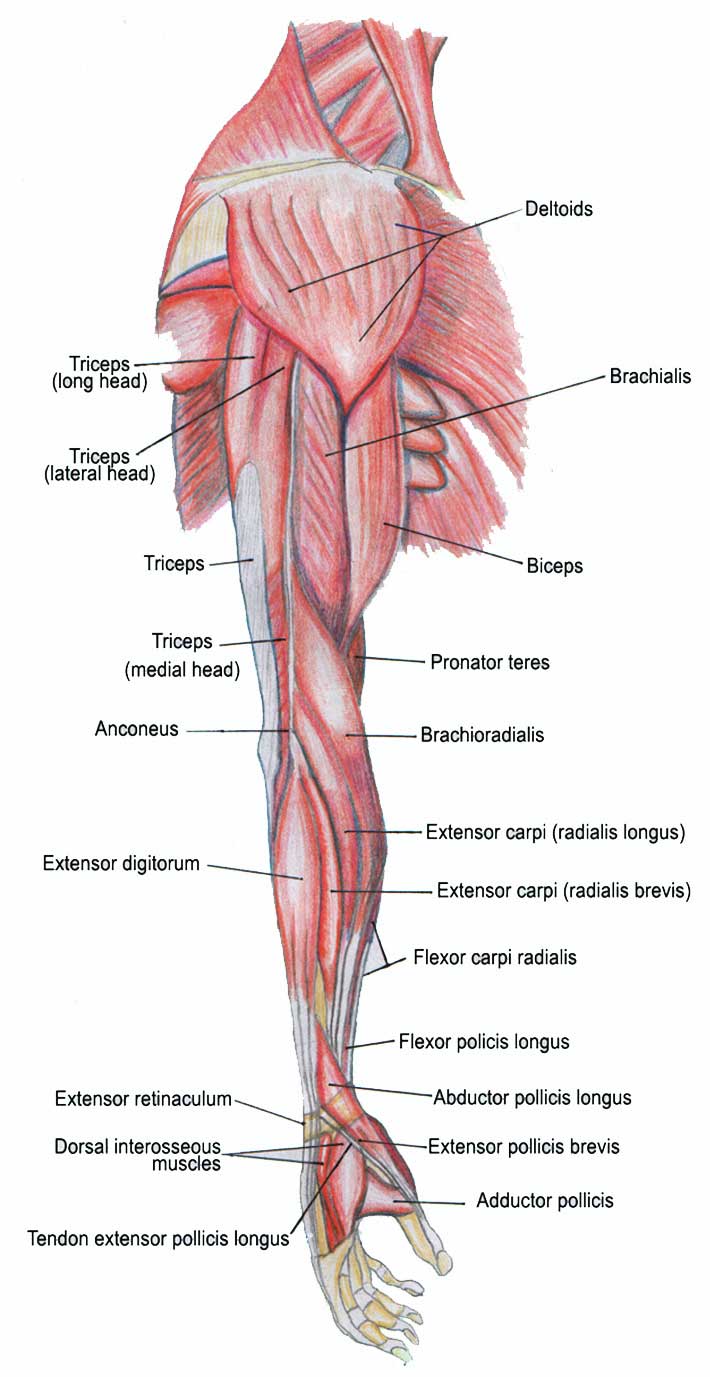
Obviously upper body and grip strength are a huge part of training in Aerial arts, but honestly a lot of it comes as we progress. I only recently started heavily focusing on training my upper body apart from doing Aerial as I feel I have hit a personal plateau in my training. However, as a beginner, you will find that you develop quite quickly just by conditioning on the apparatus. Training these areas separately never hurts though! Muscles to focus on: Biceps & Triceps,  forearm & wrist flexors, finger & grip. You need upper body strength in order to climb, suspend yourself for any length of time, pull yourself up, and grip the fabric.

Shoulder Muscles Aerial Training Circus


Shoulders & Back

Shoulders or a severely underrated and often ignored part of Aerial Arts and, being as complicated and mobile as they are, are very susceptible to injury. I am only going to briefly describe them here but I will do an entire post soon on proper shoulder alignment, as well as ways to improve shoulder strength and flexibility. You use your shoulder strength and mobility to rotate and maneuver your arm in relation to your torso, but also for any pulling or pushing or lifting motions you might do. Your back is also a huge part of any pulling or pushing motions which are very common in circus arts, especially pulling/climbing in Aerial. This group of muscles includes your deltoid, trapezius, pectoralis minor, lattisimus dorsi, among others.

Back Muscles Aerialist Circus Training